This is an open letter to anyone who has doubted my chronic illness. This isn’t a letter that is meant to attack you, but instead a letter that is meant to make you rethink the words that come out of your mouth and open your eyes to a new perspective – a perspective I hope you never have to experience first-hand.
You see, I thought that with my previous blog posts you’d understand my daily struggles. I’ve talked about it, I’ve blogged about it… heck, you’ve seen me at my worst! I’m pretty good at making light of my forever circumstance, that’s my way of dealing with it. Maybe you thought that this gave you the right to belittle this illness and mock the lifestyle I have chosen to live because of it. If I wasn’t currently maintaining a diligent workout routine, staying consistent with my bland diet, completing my long list of stretches to relieve tension, or taking prescribed medications to lessen the pain, I’d still be stuck in bed, crying, day in and day out. Would you prefer that?
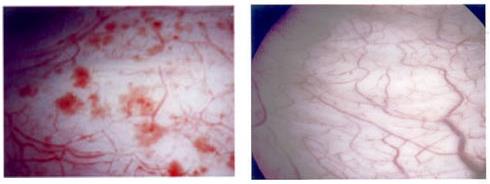
If you have not read or listened to anything I’ve said or have paid any attention to me the past couple of months I’d like you to know that the Harvard Health Publications compared the pain of a patient with IC to that of a patient with chronic cancer pain, a patient on kidney dialysis, or a patient at the end stage of renal failure. It’s debilitating. Imagine how you’d feel if your bladder were ulcered, cracked, and bleeding. I’d like you to see the bladder of a patient with IC (image on the left) and compare it the normal bladder that you have (image on the right). Looks pretty painful, right? I can go on and on about the pain I struggle with daily, but that’s not the point of this letter. I’m writing this to help you better understand me, the new me.
Believe me when I say that I’m not sharing this to get pity from you. All I want is a friend/family “I’m here for you” type of thing. I like hugs, like anyone wants for stuff that negatively impacts their life. And I most certainly appreciate a “that sucks” or “IC is stupid” or some other expression of solidarity and support. I’ve said it before, I won’t go out of my way to talk about my illness. If I do, once I’ve expressed how hard it is or how crappy I feel, I’m immediately moving on in my own thinking back into battle mode.
Understand that I have good days and bad days. I know it may be easy to think, “Well when we hung out last time, you were happy and having fun, and it didn’t seem like there was anything wrong.” Just to clear things up, I am always in pain. ALWAYS. As my illness has developed, my body has adjusted and has developed a pretty high pain tolerance – that’s how I’m able to fake a smile through a lot of the pain and maintain a life of hanging out with friends and doing things a normal 25-year-old does. But that doesn’t mean it’s easy, and it doesn’t mean I wouldn’t rather be curled up in bed with a heating pad. And sometimes, that urge to curl up in bed is going to win.
Understand how hard it is for me to watch the people around me being able to do a lot of things that I can’t. For example, being able to eat or drink whatever without questioning how it will affect them later. Being able to drink red wine or eat tomatoes without needing medication to help your body break them down. Imagine forgetting those pills and having to watch everyone enjoy the things you wish you could enjoy but can’t. It’s not easy.
Understand that I share my story to not only keep track of my progress but to help the people who are going through a similar thing. There’s a lot more of us out there than you think. Luckily I can handle the bashing, but how about the people who can’t? This illness, like any other invisible disorder, is hard enough to handle on its own. We don’t need the negativity. I’m happy to say that I’ve helped many people across the country who are battling just like me. Still think this is a dumb idea?
Understand that having an invisible illness also impacts my mental health, sometimes even greater than my physical health. Even on the days where everything feels better, my mind is still racing, worrying, afraid. When the physical symptoms subside, the anxiety doesn’t. Because having a chronic illness isn’t a “part-time” thing, a “once in a while” thing, an “only sometimes” thing. It’s a full-time thing. So even when my body behaves, I don’t go a day (or even probably an hour) without thinking about my condition. Because you see, IC has a mind of its own and I never know when it will strike. I never know when the pain will come. I never know that if I’m pushing myself too hard in the gym. I never know if my medication will stop working. I can’t plan when I do or don’t flare, or do or don’t land in the hospital.
So I know you don’t understand my pain, and that’s okay. I don’t expect you to. All I ask is that you try to be understanding of my situation, and understand that I’m not always feeling up for what I ultimately want to do. Just because I’d rather be in my bed, that doesn’t mean I don’t want to see you. Believe me, I do. But sometimes, when you’re in so much pain that you can’t see straight and your insides are shredding and making you puke, you just can’t bear to go out and watch everyone else having a great time. It’s very hard on me and I’m sure it weighs down the whole group. Sometimes it’s just better for me to stay home.
I know who I am, and I don’t need your reassurance or condolences to bolster my self-esteem or tell me I’m not broken, or that I belong, or that my illness doesn’t define me. I’m not looking for sympathy, or a shoulder to cry on. I do, however, appreciate the respect of recognizing that everything I do is a battle that you don’t know and can’t understand, and that I show up and fight every day. I’m not pitiable. I’m a warrior. I’ve changed, and most of the time, I’m secure in who I have become. I am proud of the battles I fight every day, and the victories I win that you’ll probably never recognize.


